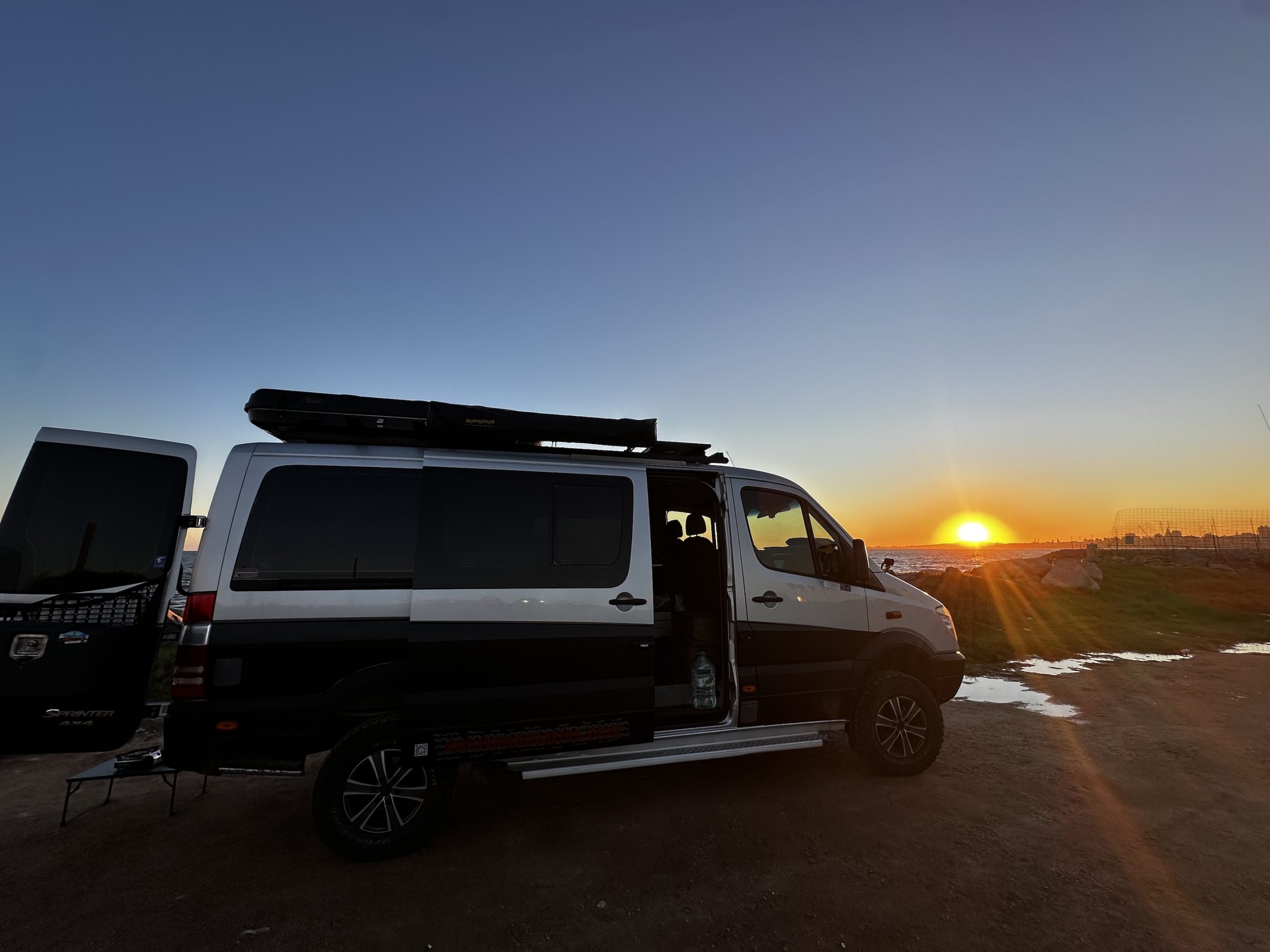
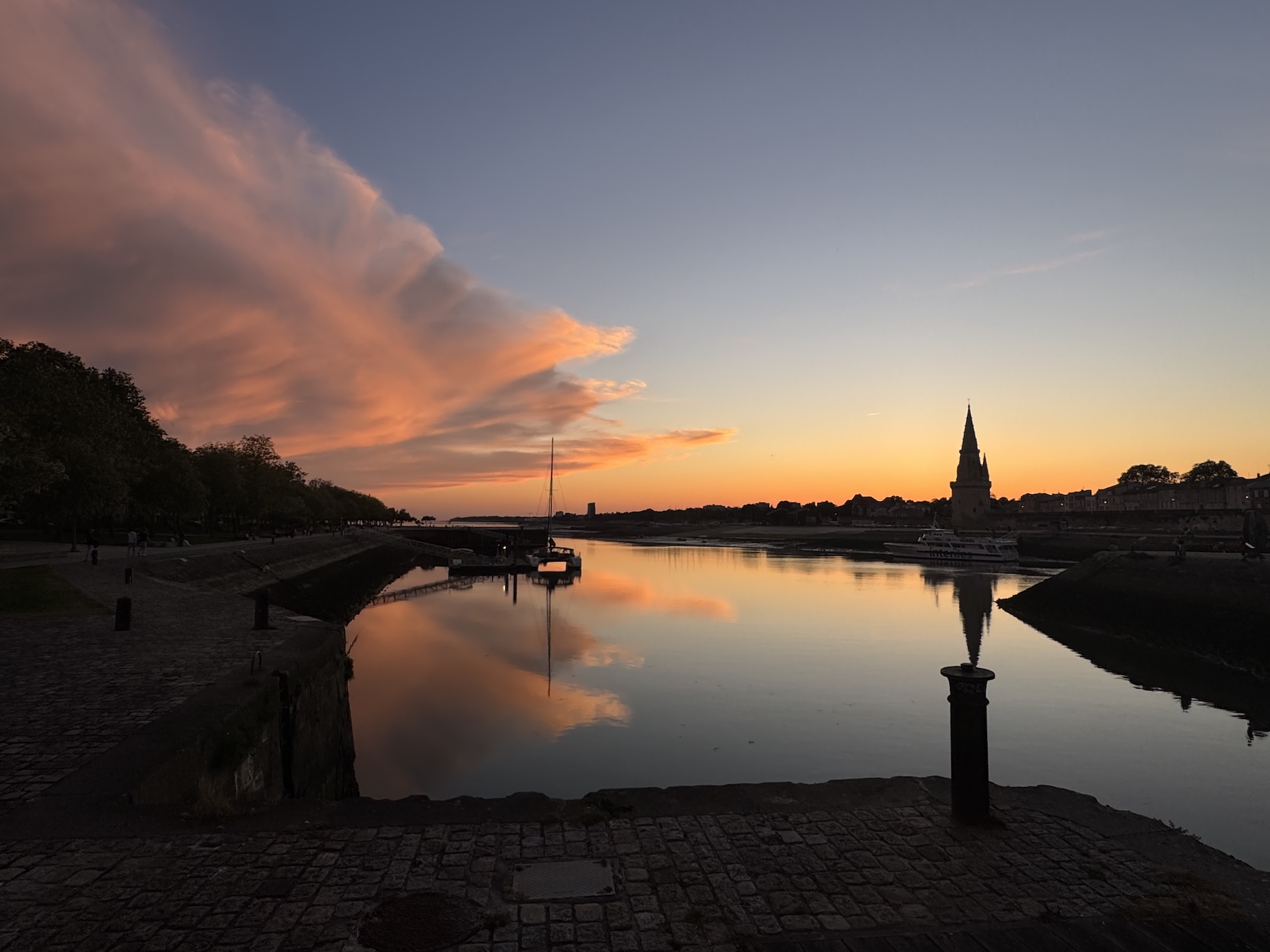
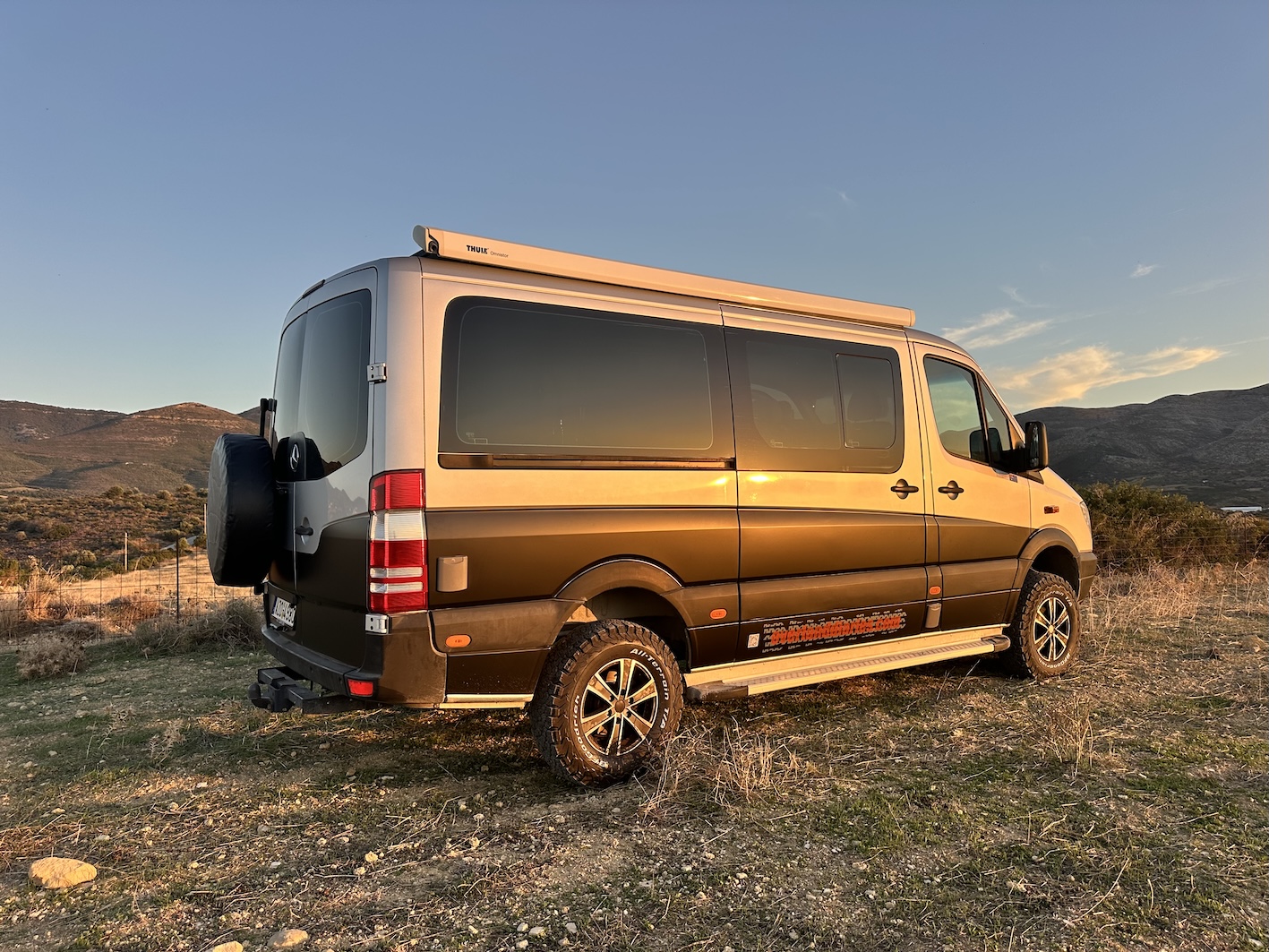
From ferry crossings and rain-soaked Italian villages to the dust, chaos, and endurance of West Africa, this was the second part of our “Till the Road Ends” expedition. After the roller coaster we went through changing vehicles — from a Toyota Land Cruiser to a Mercedes Sprinter 4×4 camper — our latest overland chapter turned into one of the toughest and most unforgettable journeys we’ve ever experienced.
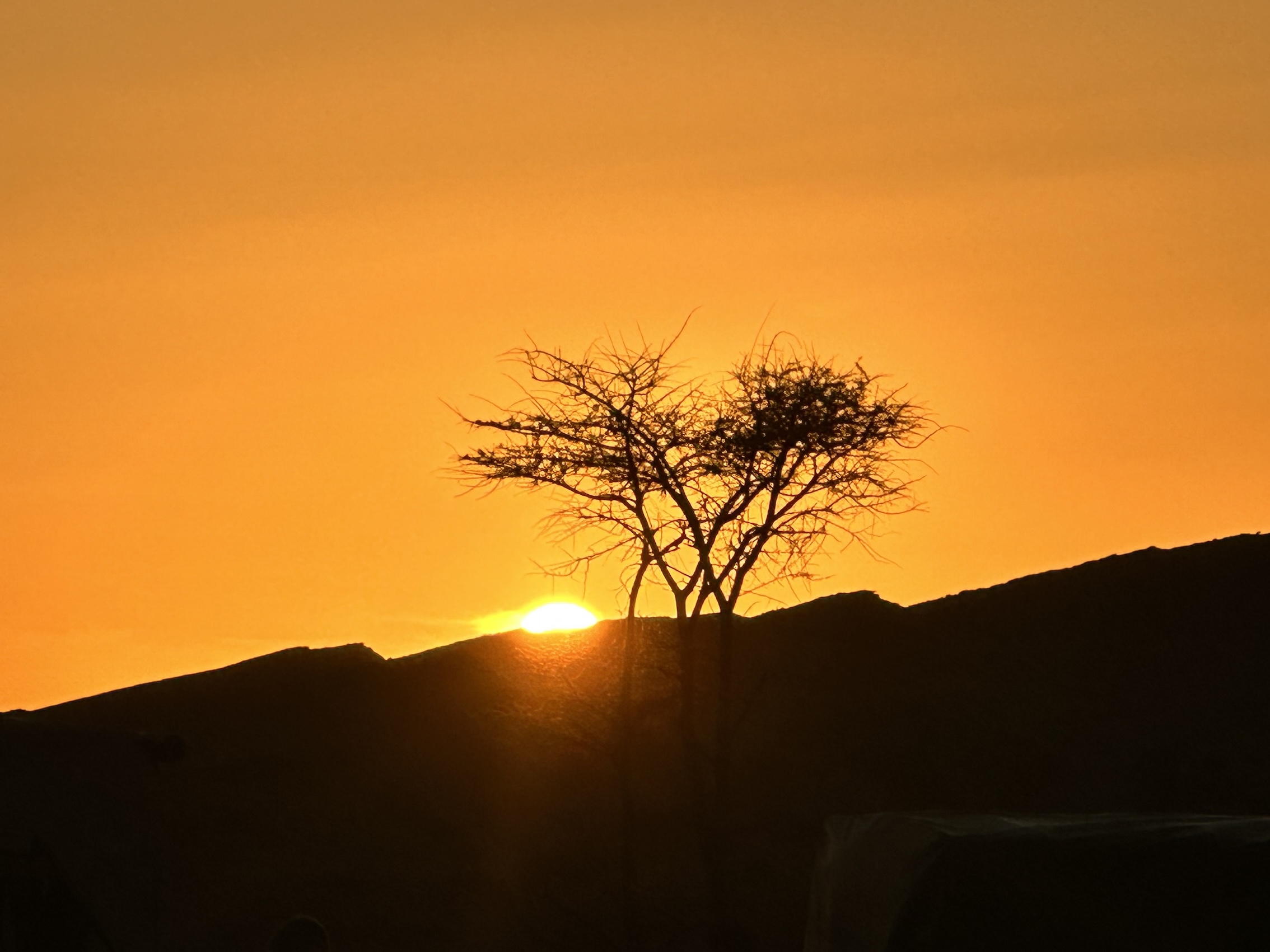


oplus_34
As always, our journey began from Greece. We boarded the ferry to Italy and arrived in Ancona with a clear destination in mind — Verona. There we reunited with our friends and fellow overlanders from the Snuggle Tour crew, whom we had first met almost a year earlier in Iceland. The following days were filled with great conversations, route planning, and plenty of laughter over bottles of Verona’s famous Amarone wine, as excitement slowly built for the adventure ahead.

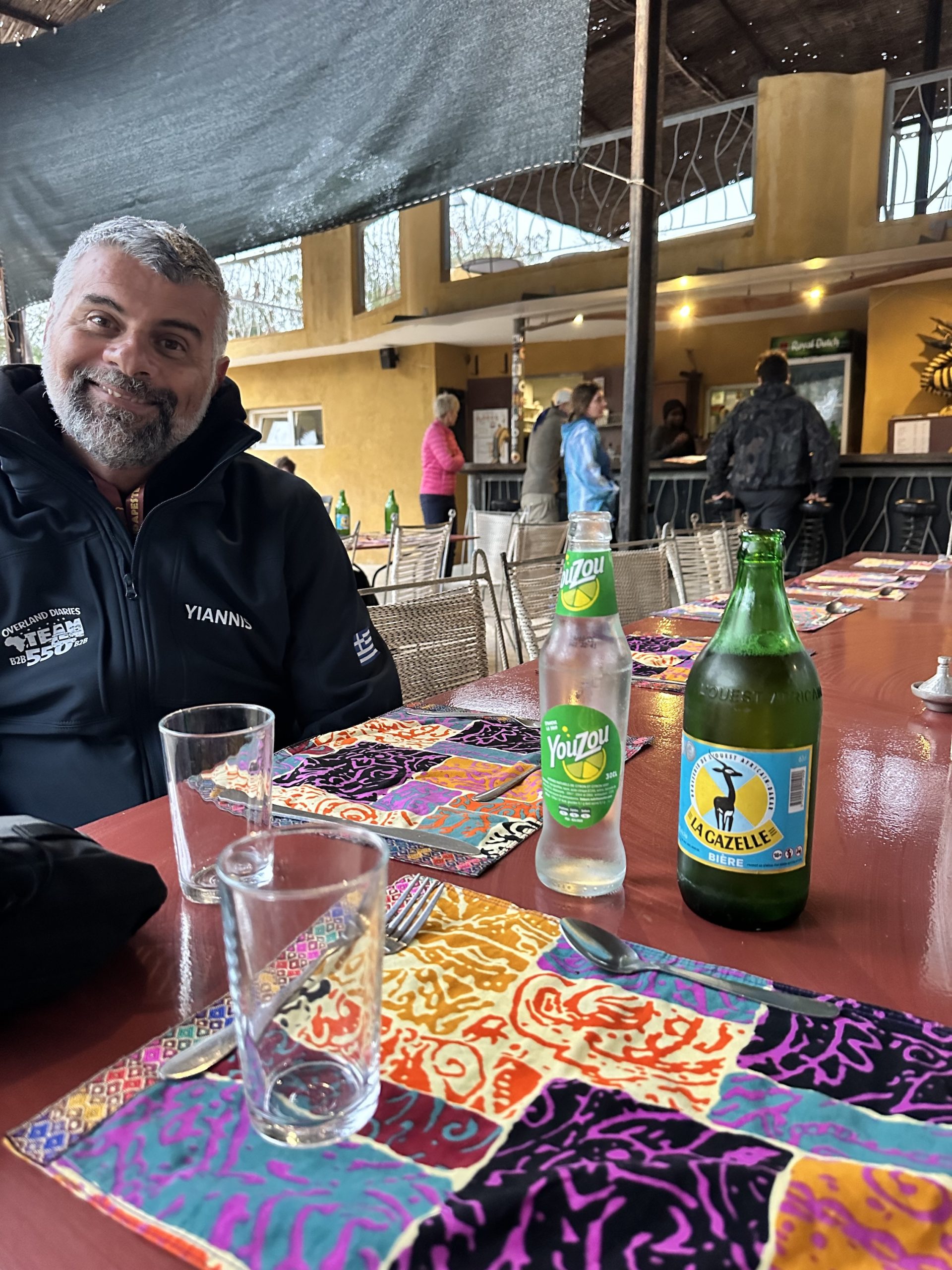 Before we knew it, those relaxing days had passed and it was time to hit the road once again. Italy greeted us with classic autumn weather as we made our way toward Cinque Terre. Heavy rain clouds hung over the colorful coastal villages, creating an almost cinematic atmosphere. Despite getting completely soaked wandering through the narrow streets and trails, the place lost none of its charm. We captured rainy footage, embraced the weather, and somewhere along that coastline the feeling truly set in, the real southbound journey toward Africa had finally begun.
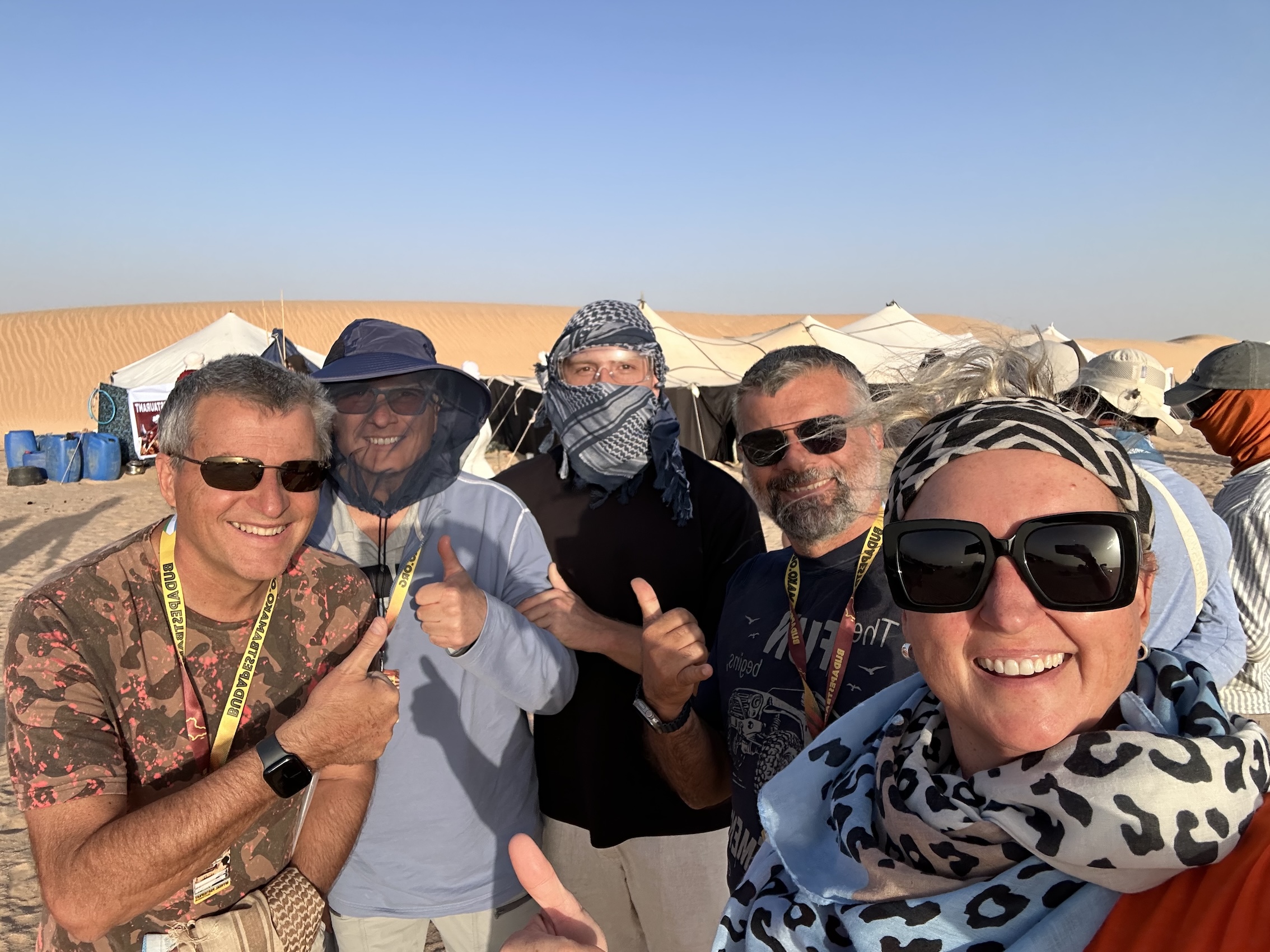
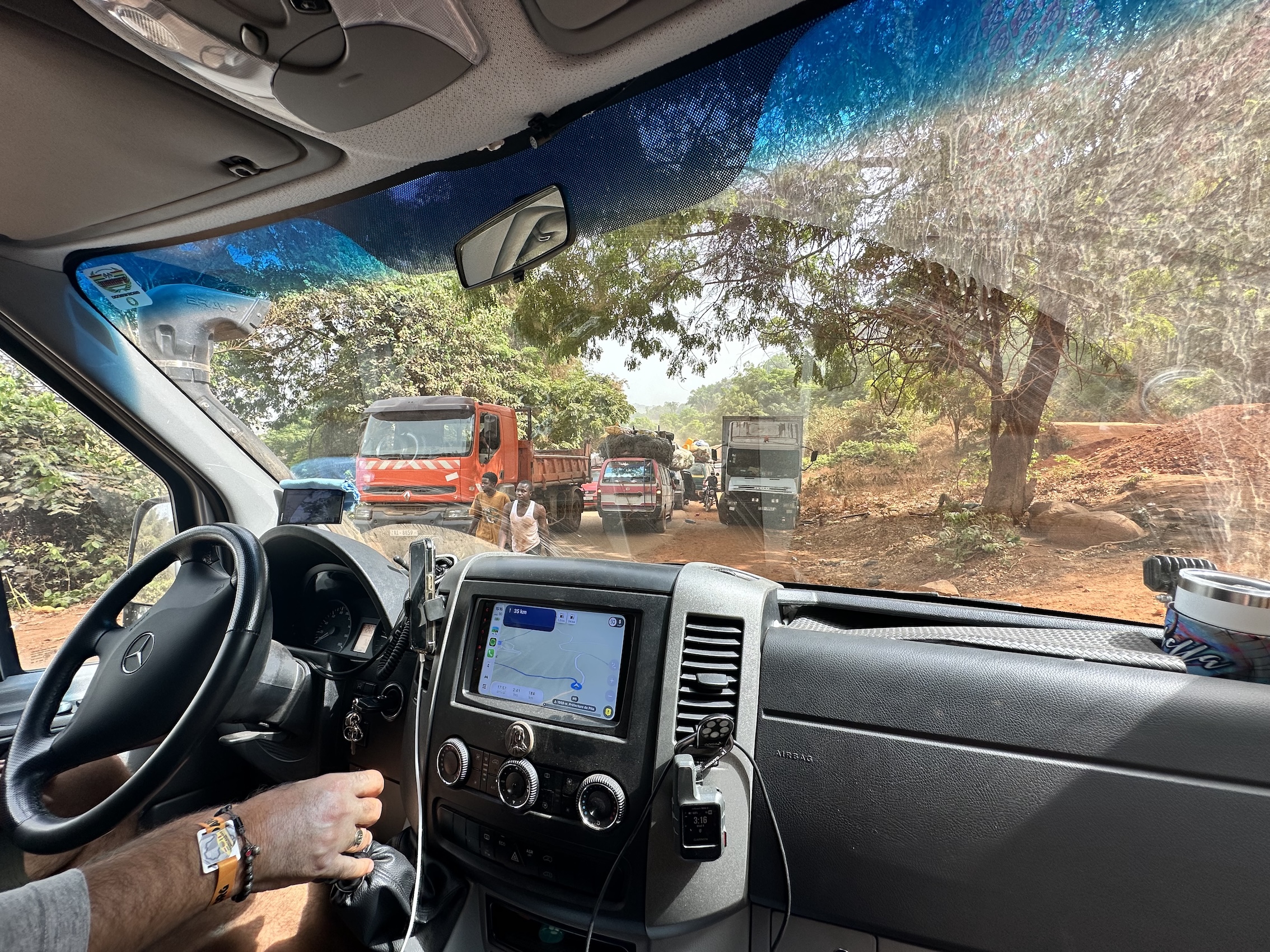
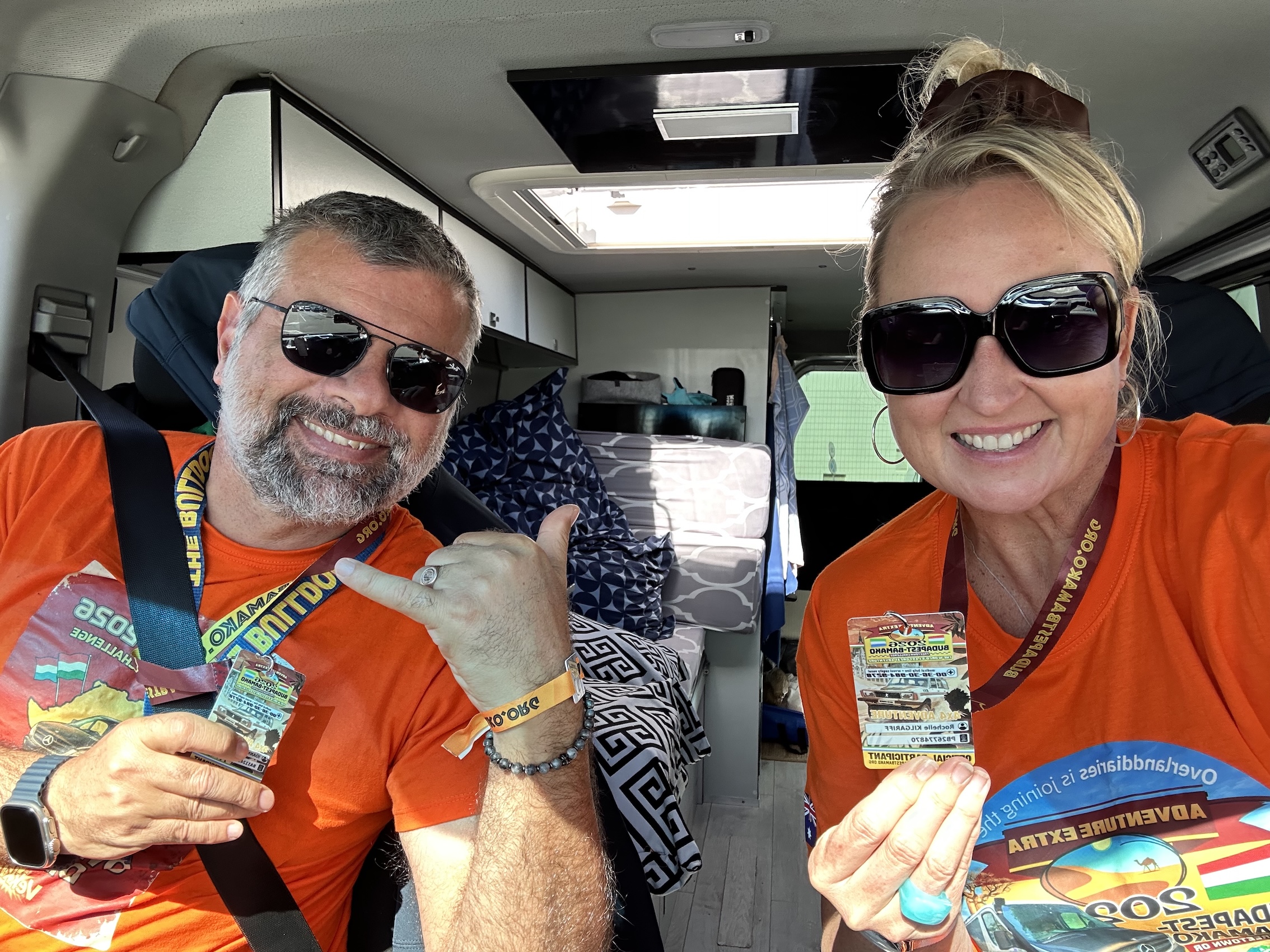
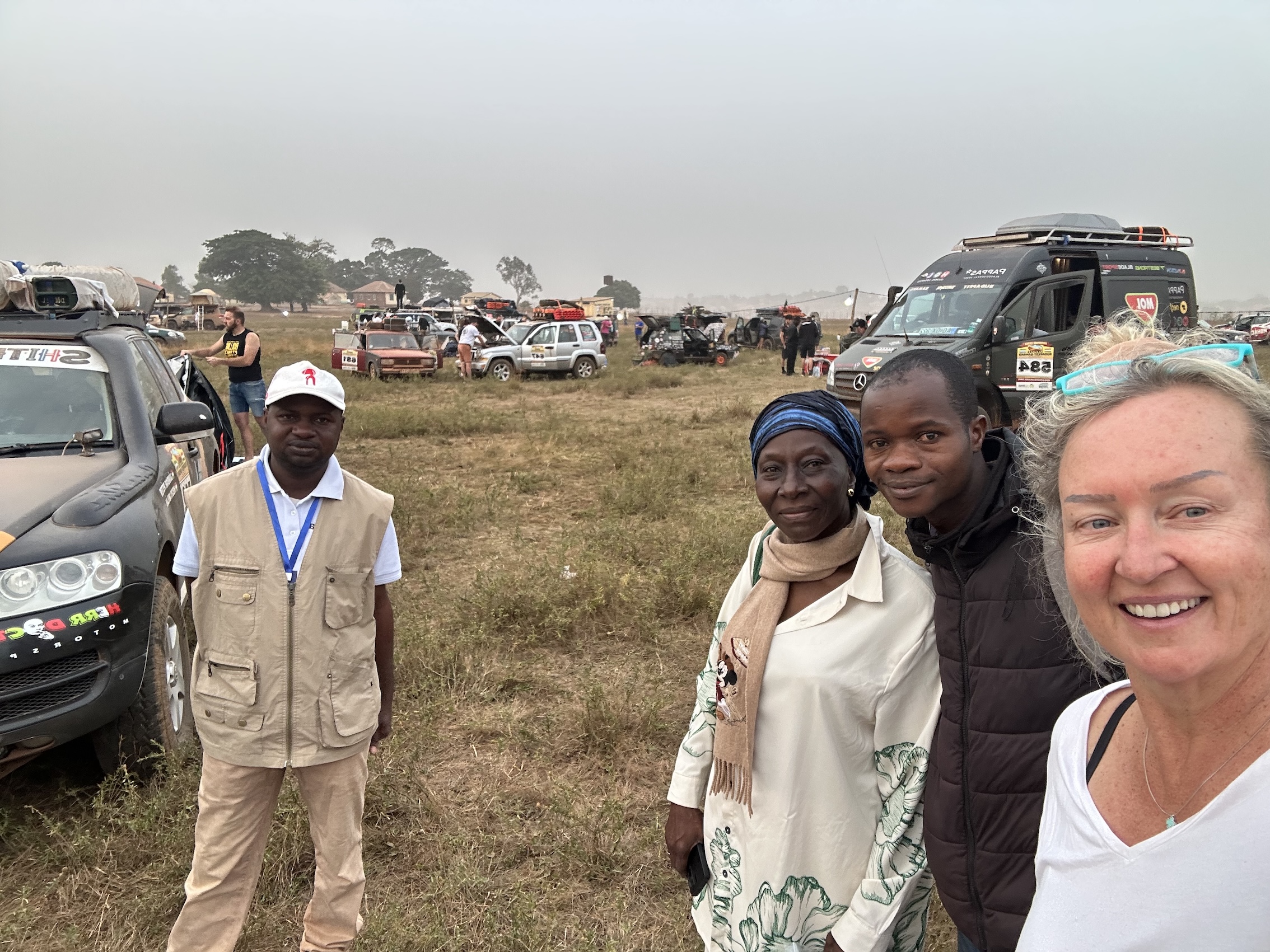 Morocco was waiting for us and, somewhere far beyond the horizon, the start line of the 2026 Budapest Bamako Rally. Calling it just a rally would not really do it justice. Budapest Bamako is more of a moving overland circus across continents — part adventure, part endurance test, part survival exercise and in all of this there is also charity.
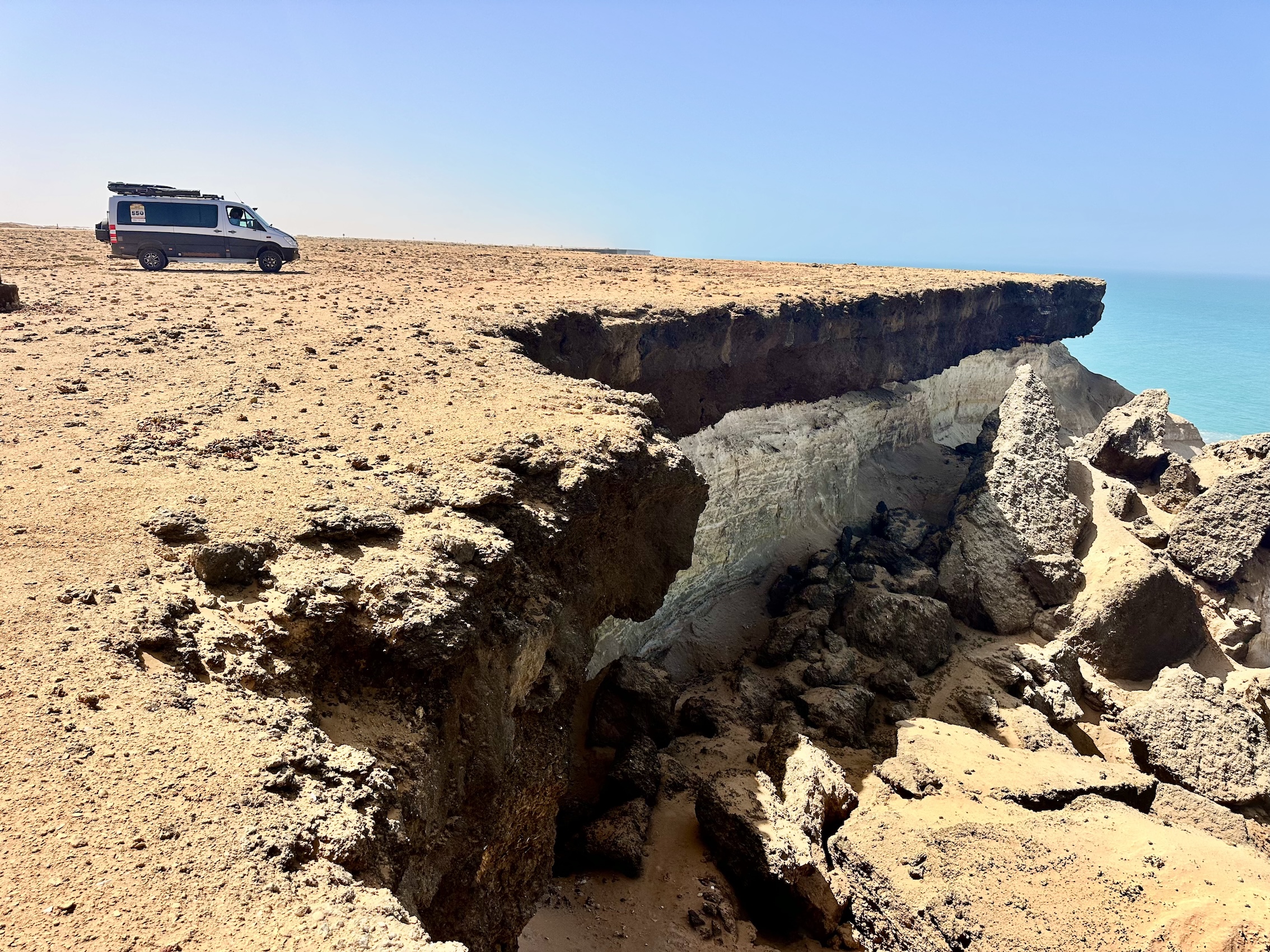
Thousands of kilometers through deserts, remote villages, chaotic borders, broken roads, and places where plans usually stop working. No support crews, no guarantees, no comfort. Just your vehicle, your team, and whatever the road decides to throw at you next.


 Naturally, we decided to make things even harder for ourselves by avoiding toll roads completely. Instead of rushing south on highways, we followed the slower Mediterranean route through Monaco, Montpellier, Saint-Cyprien, Barcelona, and Alicante. The kind of driving where the journey itself becomes part of the adventure. Small coastal roads, endless hours behind the wheel, random stops for coffee, sea views one moment and industrial ports the next. Before crossing into Africa, we made one final stop in Fuengirola to spend a few days with our friends Claudia and Tony. Good food, relaxed evenings, familiar faces, and a temporary sense of normality before everything became dust, heat, checkpoints, and survival mode. Looking back now, those few quiet days on the Spanish coast were probably the last moments where the journey still felt easy.

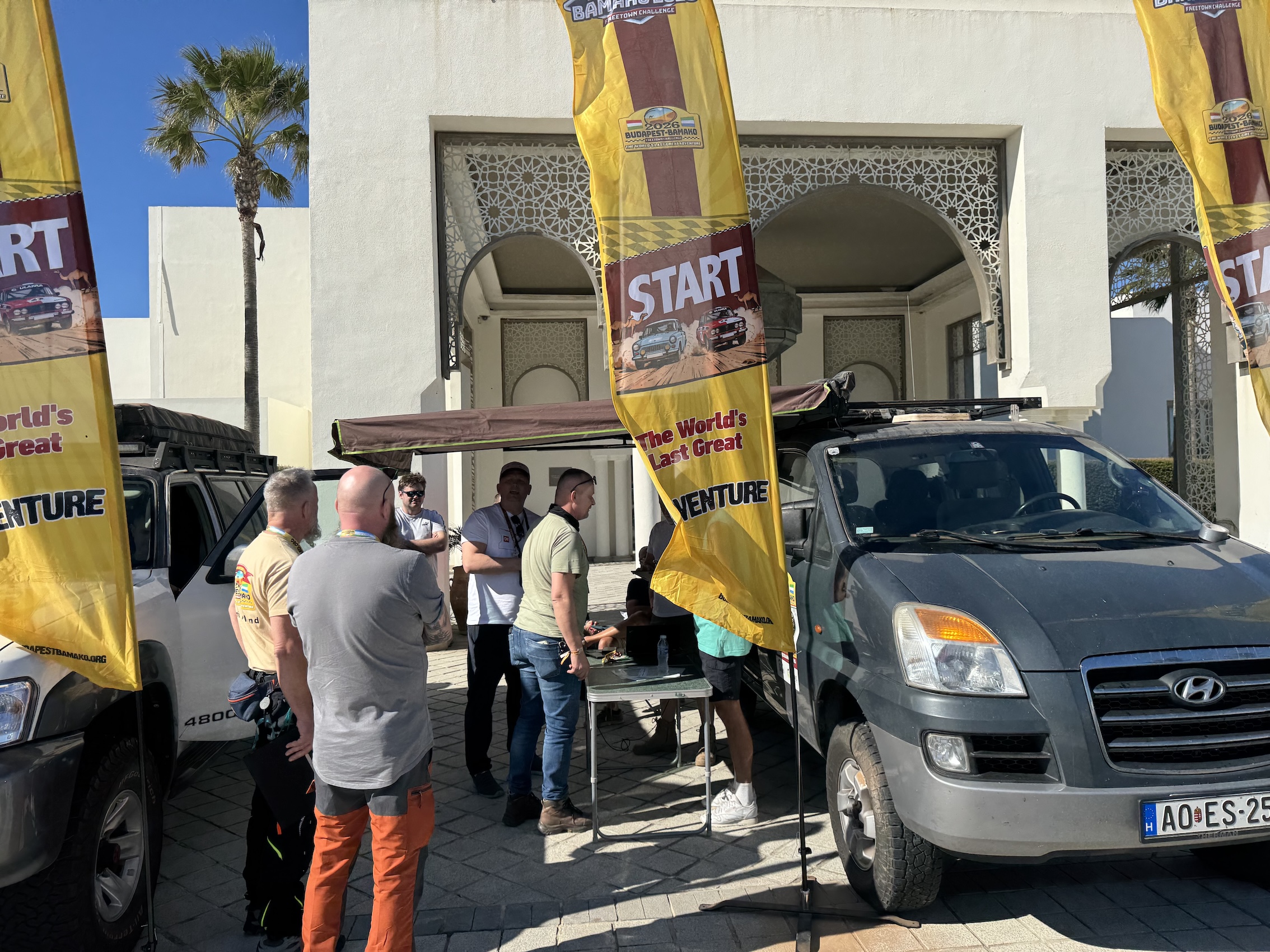
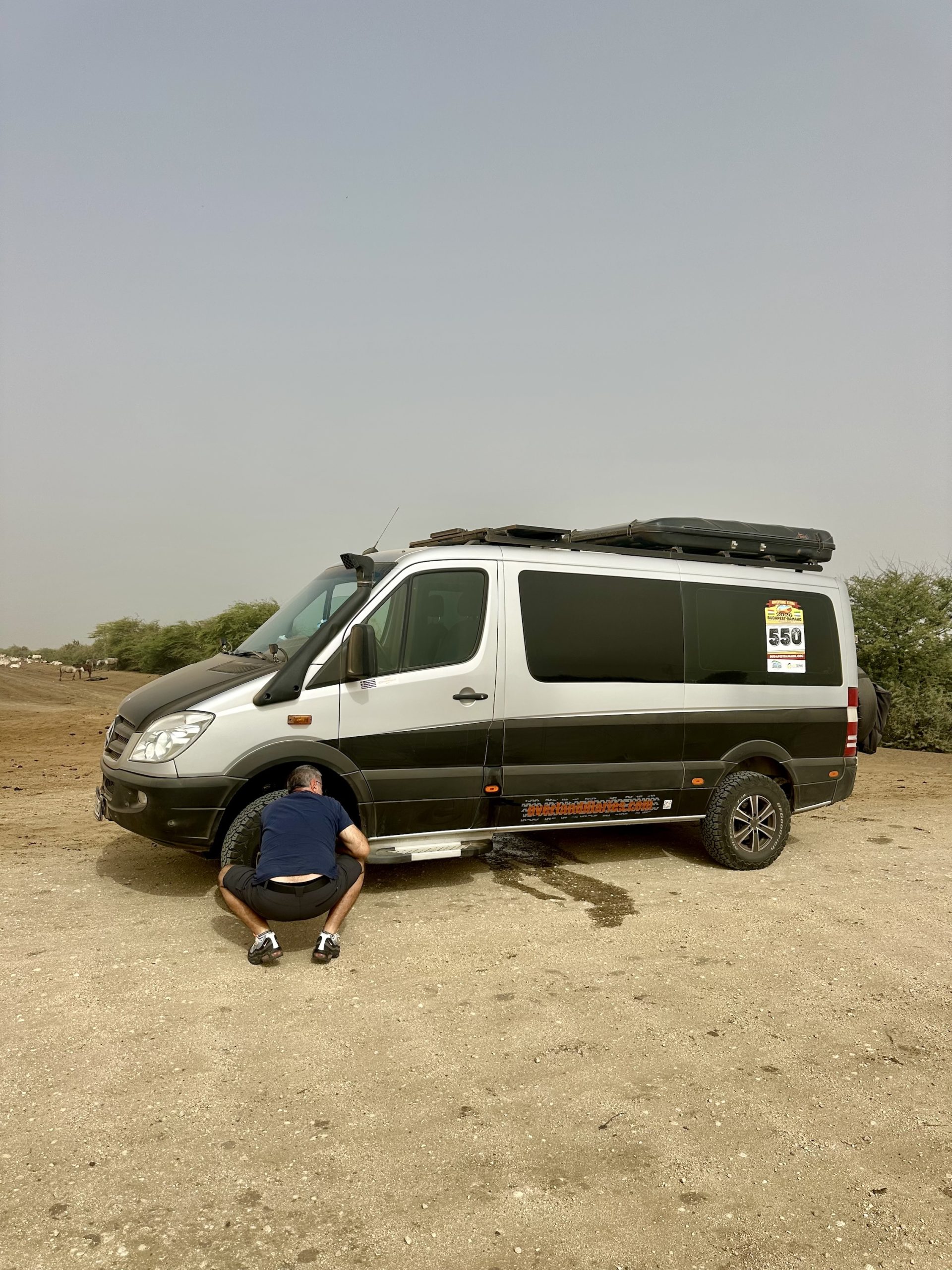 Crossing into Morocco always feels special. The atmosphere changes instantly — the smells, the traffic, the colors, the rhythm of life. We spent our first night outside Tangier before finally arriving at the Hilton Tangier, the official starting point of the 2026 Budapest Bamako Rally.
Once the rally started, everything became a blur of long driving days, sand, dust, and exhaustion. Morocco pushed us through the High Atlas mountain passes around Midelt, the silent dunes of El Chigaga, and the isolated town of Assa before we finally hit the coast in Boujdour and embarked on the lonely single-lane road toward Dakhla.
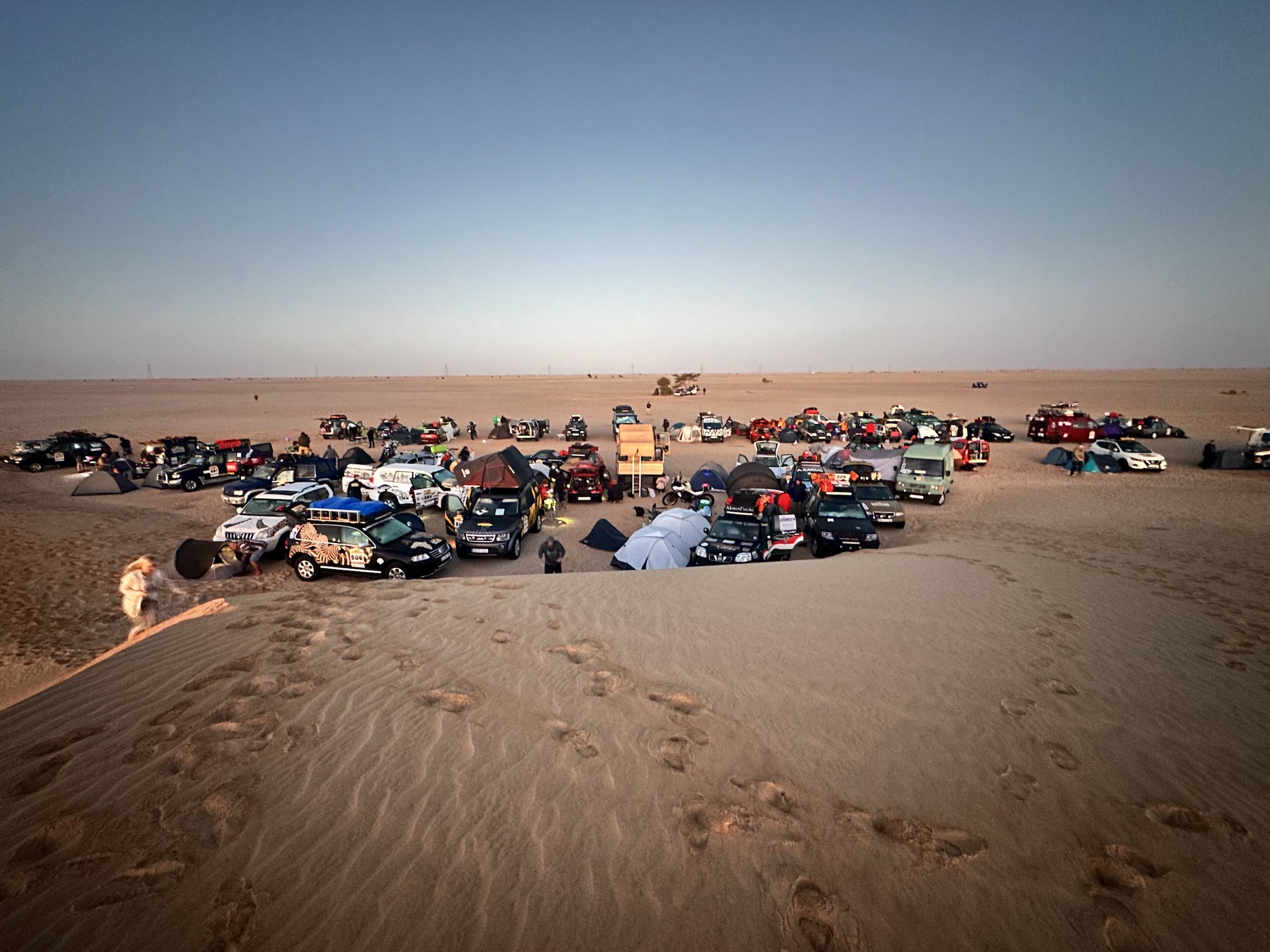
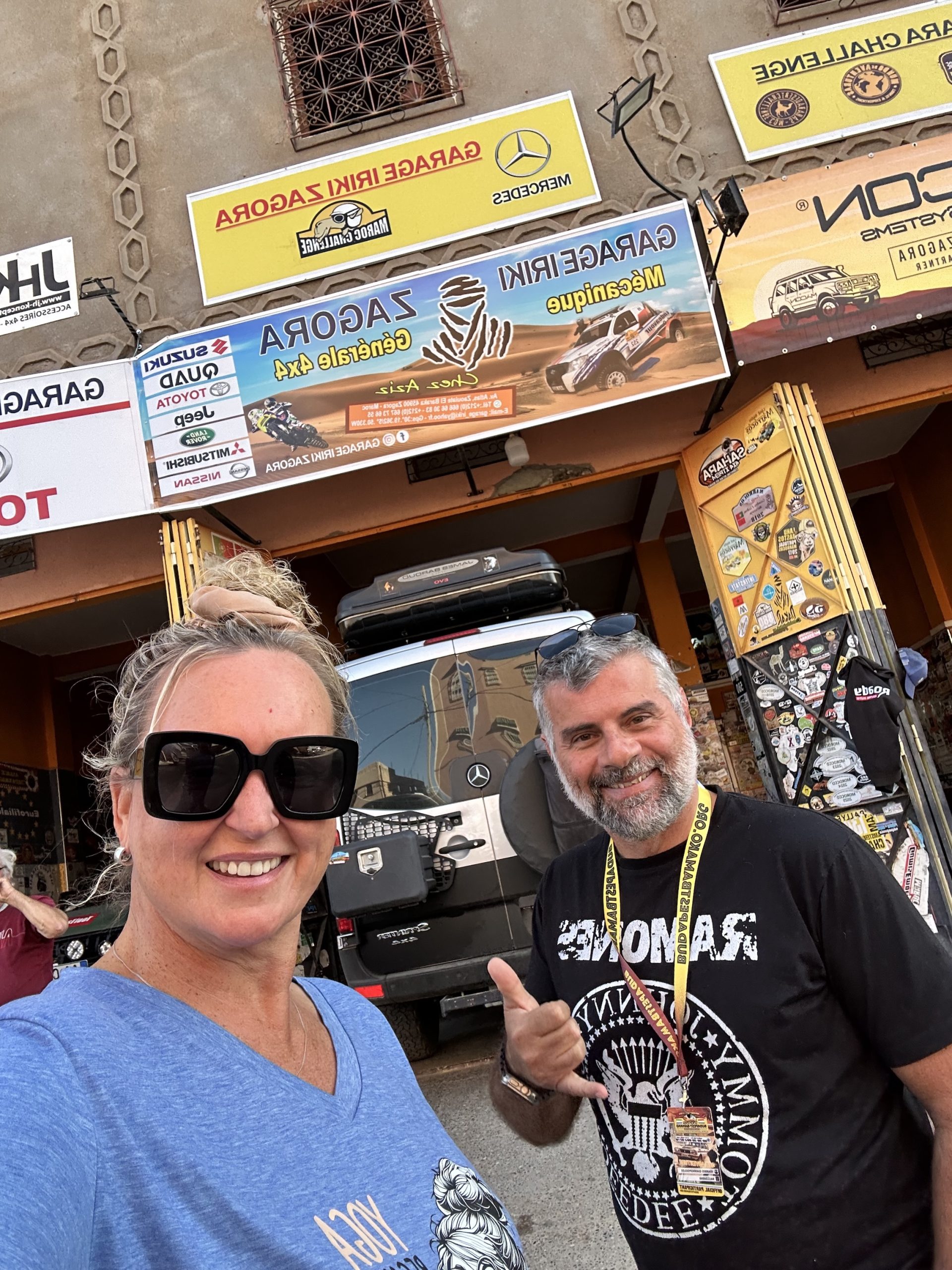
 Endless desert roads seemed to stretch forever. Every day started early and finished late, leaving little time to think about anything except a quick meal and the next checkpoint. From there we crossed into Mauritania and camped in the sand dunes of Bou Lanouar, where all border procedures were handled in specially set-up tents for the rally. After traveling through nearly 79 countries, crossing borders — especially African borders — with such ease was something incredible to witness. Before continuing toward Nouakchott, we were stopped by the tide because of delays and lost our chance to physically drive along the Atlantic coastline, something I had personally been looking forward to for a long time. As we moved through Mauritania, the landscapes became harsher, the heat more intense, and the roads increasingly unpredictable. Yet somehow the convoy kept moving. After days of hard pushing through raw terrain and along a 100-kilometer stretch of terrible dirt road, we eventually drove beside the Senegal River through a national park filled with wildlife. Pelicans and pink flamingos were everywhere, and although we hoped to spot crocodiles and warthogs, we weren’t lucky enough.

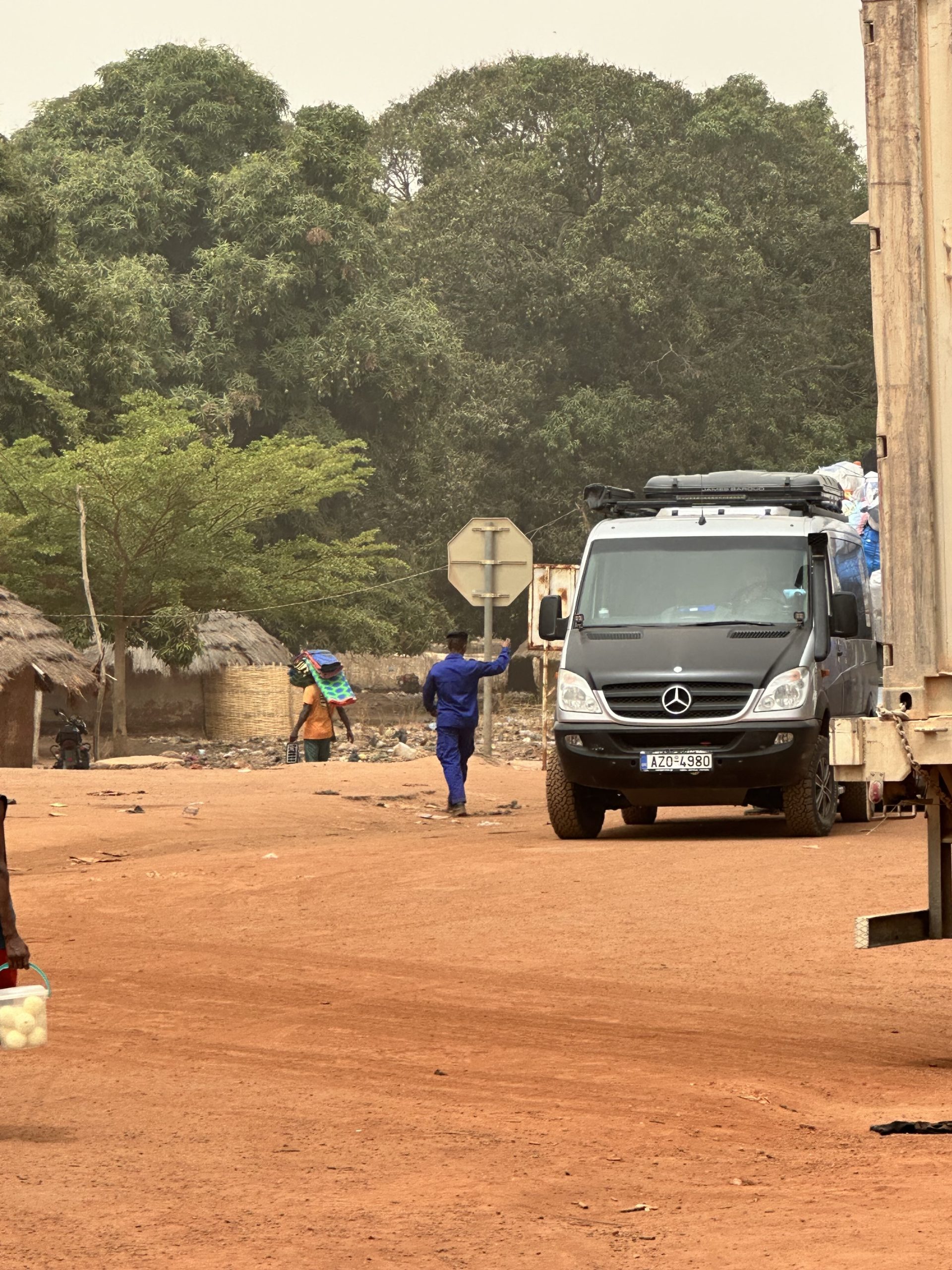 After several demanding days, we were told this stage would be more relaxed, especially because a border crossing was involved. In reality, nothing about it felt relaxed. The only thing that changed was that we left the Sahara behind and continued south into the Sahel, entering a completely different Africa. Senegal brought a totally different energy. We spent the night in Saint-Louis, a city offering a unique glimpse into Senegal’s French colonial past as the former capital of French Senegal. Its historic buildings stood in striking contrast to the vibrant rhythm of modern Senegalese life, and for the first time we truly felt we had reached “real Africa.”
In Africa you are rarely alone. The moment you step out of your vehicle, you are surrounded by locals approaching you with the hope of making money out of you, whether by selling something, offering help, requesting money politely, or simply overcharging you.

At first it feels overwhelming, and eventually it begins to wear you down mentally. In true Budapest Bamako fashion, we crossed the rest of Senegal in a single day and made one final overnight stop in Tambacounda. By this stage, checkpoints no longer mattered to us. We were simply struggling to keep up with the overnight bivouacs in order to stay safe. Budapest Bamako was proving far tougher than we had expected, and we were not ready for it.

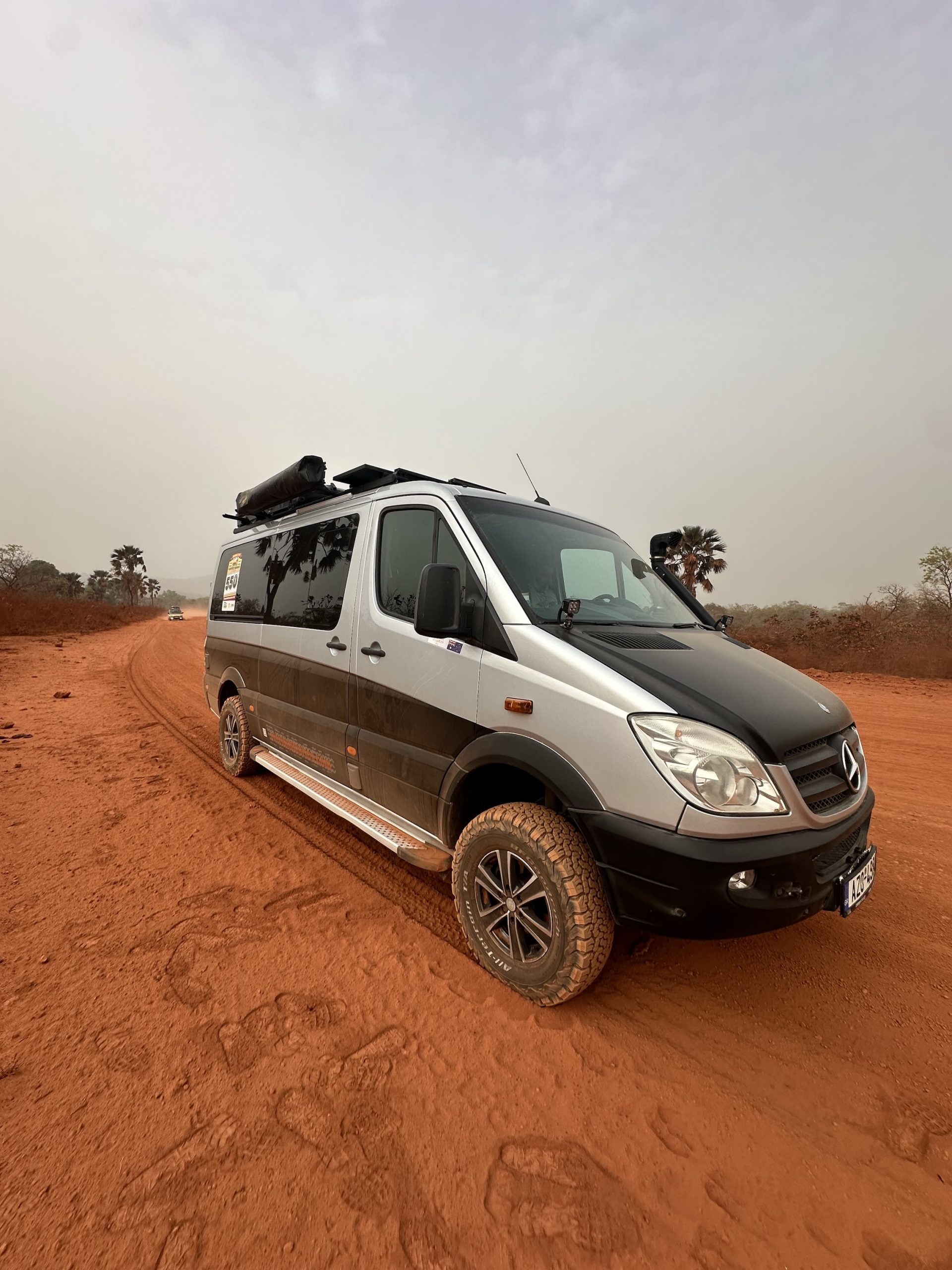 From that point onward, our luck completely abandoned us. On the road toward Labé in Guinea, after another hectic border crossing into yet another new country, a group of kids fired a slingshot at our Sprinter and shattered the rear window. What followed became one of the hardest parts of the entire expedition. We arrived in Labé completely shocked and unsure what to do next. Do we continue the rally? Do we stay for a police investigation? How do we remain safe in a vehicle that was now fully exposed? That night is something both of us will remember for a very long time. The next morning we decided to finish the rally and deal with everything else later, as no replacement window was available anywhere in Labé — or elsewhere in Guinea. We temporarily held the broken glass together with tape and continued toward Kindia, believing the worst was behind us.
We were wrong.


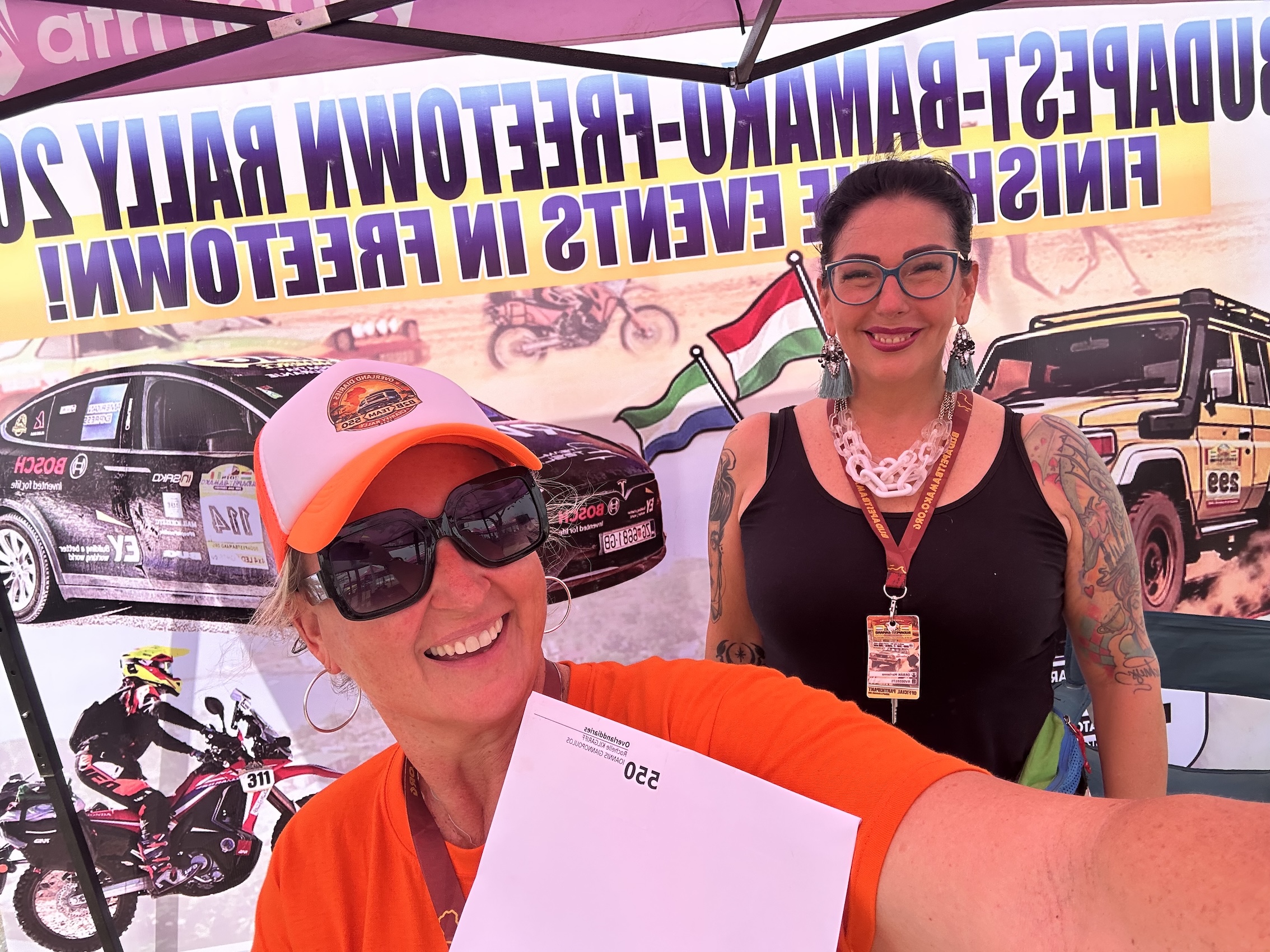
 That day we covered only 260 kilometers, yet it took us 12 hours on some of the worst roads we have ever driven. Dust entered everywhere. The heat inside the vehicle became unbearable, and the obstacles we had to cross to reach our destination pushed both us and the Sprinter to the limit. On our final day, mentally and physically broken, we crossed into Sierra Leone and finally reached Freetown, where the rally officially ended. Crossing the finish line felt unreal. After thousands of kilometers, countless border crossings, and relentless days on the road, we had made it.
Yet the finish line brought us no joy because our real problems were only beginning. Africa quickly reminded us that repairs are never simple on the road. We needed the window fixed before attempting the return journey, but no replacement parts existed anywhere nearby.

 Leaving the vehicle unattended was not an option, so for the next two nights we slept inside the Sprinter in nearly 45-degree heat, keeping one eye open for potential intruders while desperately searching for solutions. Eventually someone fitted a temporary plastic window using local materials, but it lasted only a few hours before the glue failed completely and the window fell off again. To cut a long story short, with help from fellow racers and new friends, we patched everything together with duct tape — an overlander’s best friend — just enough to keep moving.
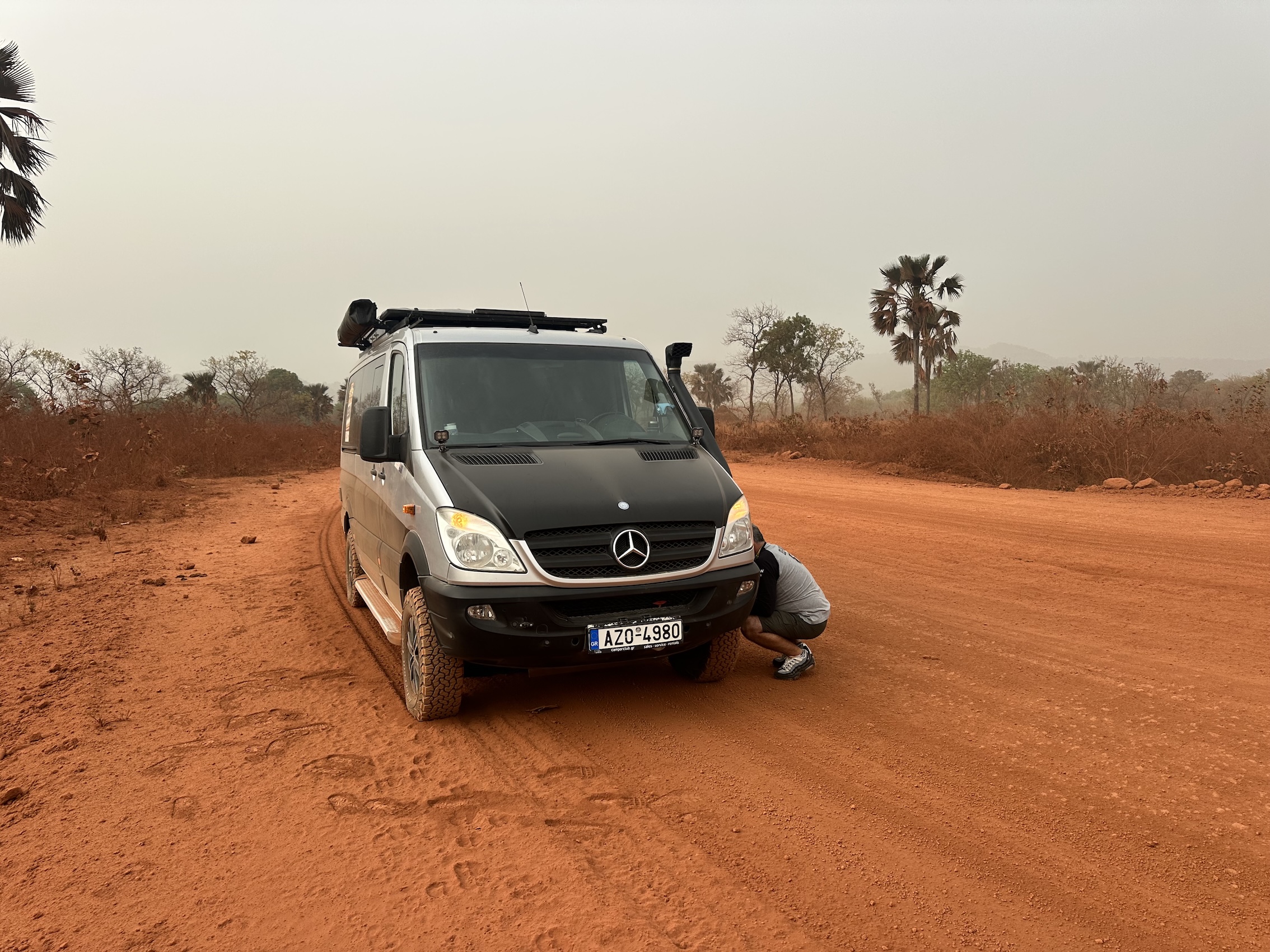
At that point there was only one thing left to do: drive north. We teamed up with Antony, another Australian competitor from the rally, and entered full survival mode. In an almost nonstop driving rhythm, we crossed Guinea in less than 24 hours.
Were we finally out of trouble?
No.

When we attempted to re-enter Senegal, Rochelle was denied entry because Australians required a visa. Naturally, we were completely confused because we had entered Senegal without any issue on the way south. Antony (that had already obtain a visa for the trip back home) explained that during the rally we had been covered under a group visa arranged by the event organizers. Now we were on our own and therefore were being told to turn around, drive all the way back into Guinea, obtain a visa, and return again.


 At that moment our legs literally started shaking. The constant bad luck had completely broken us mentally. I had never seen my wife in a worse emotional state, and something had to be done. Out of desperation, we contacted the local fixer previously used by the rally and begged for help. Night had already fallen, and spending the night at an African border crossing with a broken window was simply not an option.
And somehow, a miracle happened.
After negotiations with the fixer, the border officer approached us and allowed Rochelle into Senegal without an entry stamp — completely unofficial and probably something that could only happen in Africa.

 Still in shock, we continued toward Tambacounda and Saint-Louis, where the fixer later managed to arrange a proper exit stamp in Rochelle’s passport, despite the fact that she had technically never entered the country legally in the first place. At that point, all we hoped for was to make it out of this roller coaster in one piece.
We pushed across Mauritania in another brutal sub-24-hour run and finally reached Morocco, which genuinely felt like returning to civilization. We drove overnight in Dakhla and from there onwards to Al Marsa, and Sidi Ifni before eventually saying goodbye to Antony. After weeks of pressure and exhaustion, we finally slowed down and decided to spend some time recovering in Morocco.

 Midelt gave us a chance to breathe before we continued toward Marrakech, where we finally managed to replace the broken rear window. Unfortunately, only an OEM part was available, and the cost hit our budget hard, but after everything we had been through there was no other option. The repairs didn’t stop there. Back in Zagora, we also reinforced the rear suspension leaf springs after realizing that the weight of our Sprinter and the punishment of African off-road tracks had pushed the setup beyond its limits. It was another reminder that overlanding is just as much about adapting and repairing as it is about exploring.Eventually we made our way to Essaouira, still one of our favorite places in Morocco , before continuing north through Rabat and finally board the ferry toward Gibraltar.
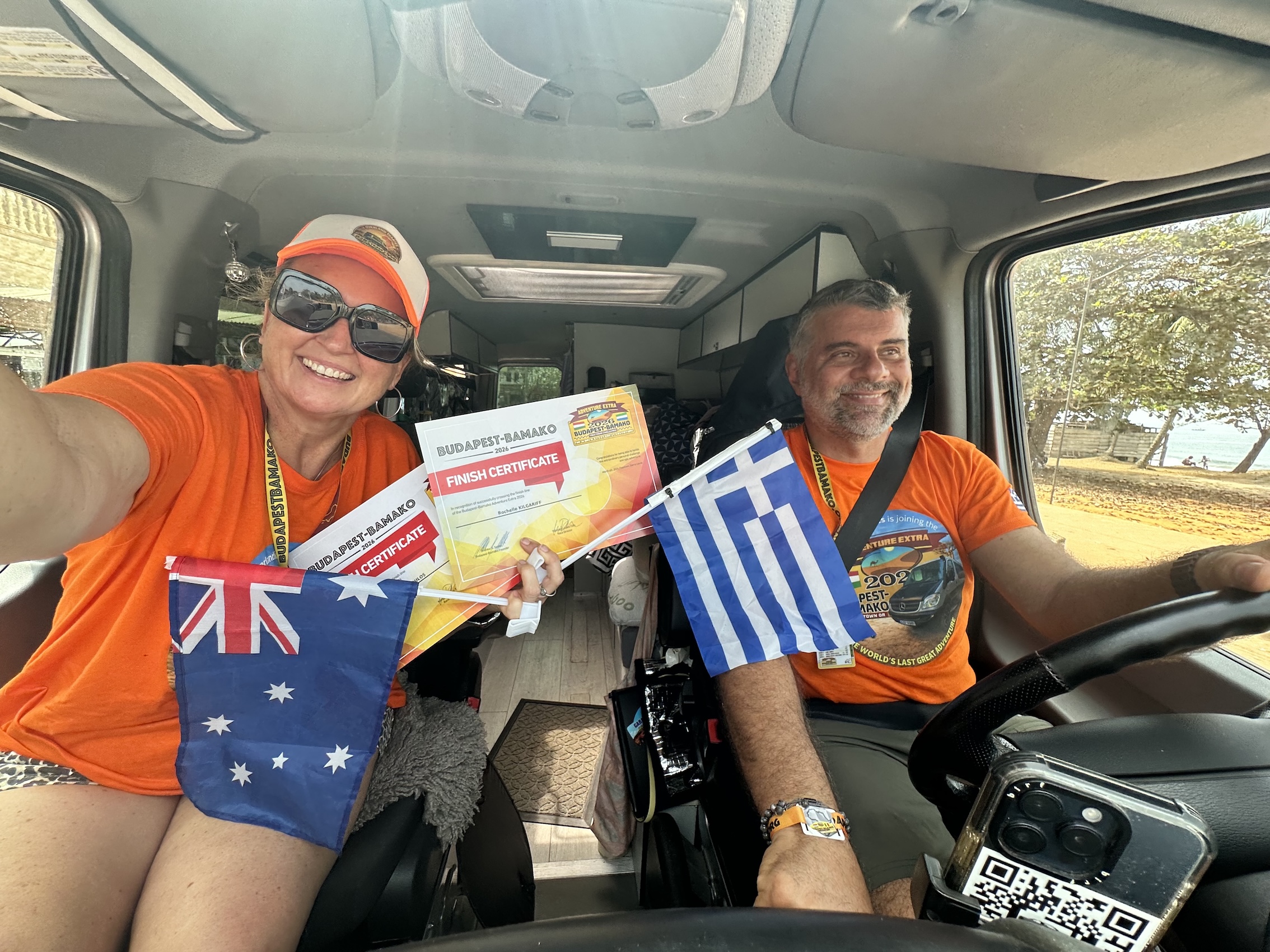
That was where the Budapest Bamako adventure finally came to an end for us.
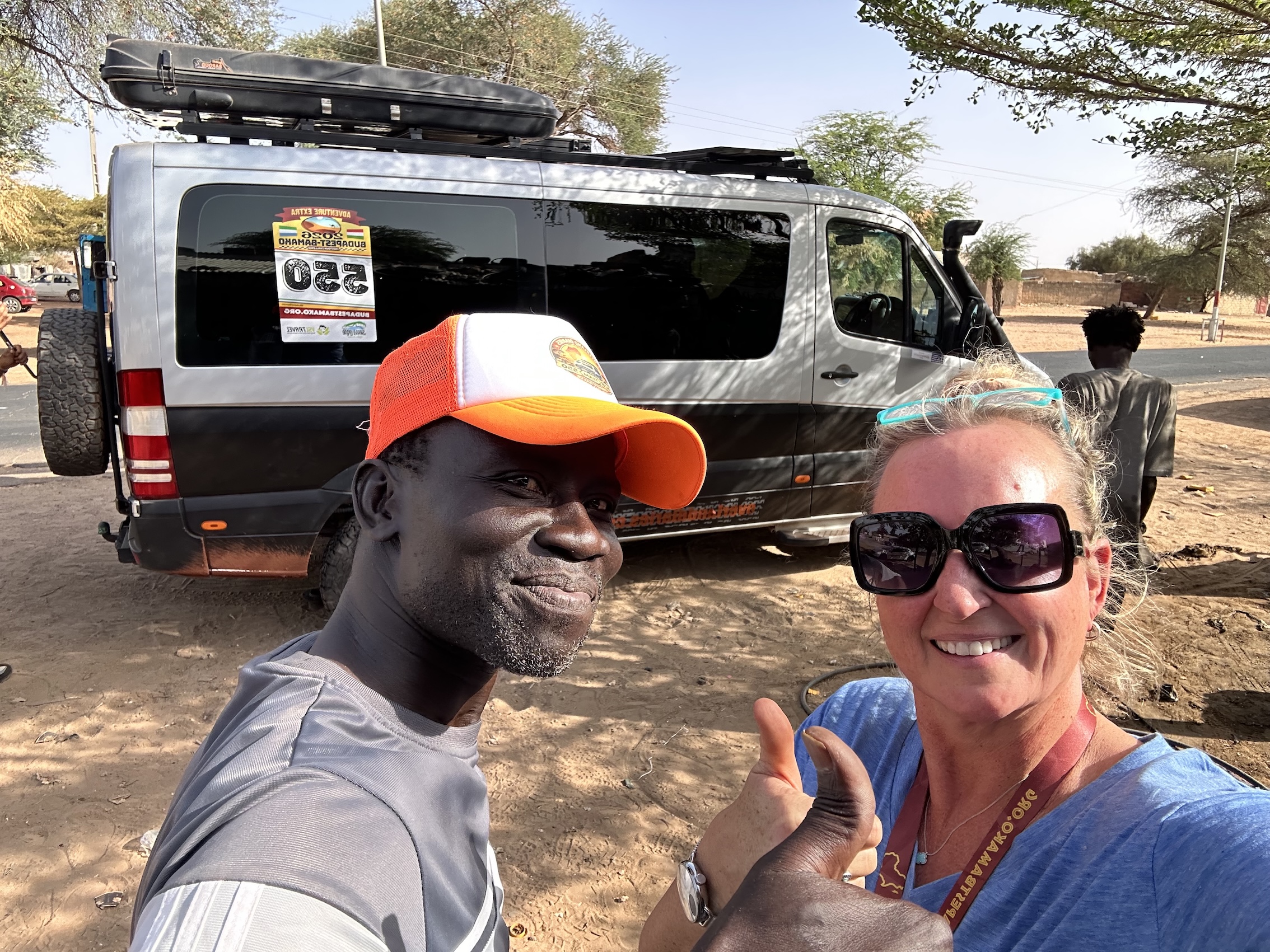
Looking back now, the question everyone asks is simple: after everything we went through, would we do it again?
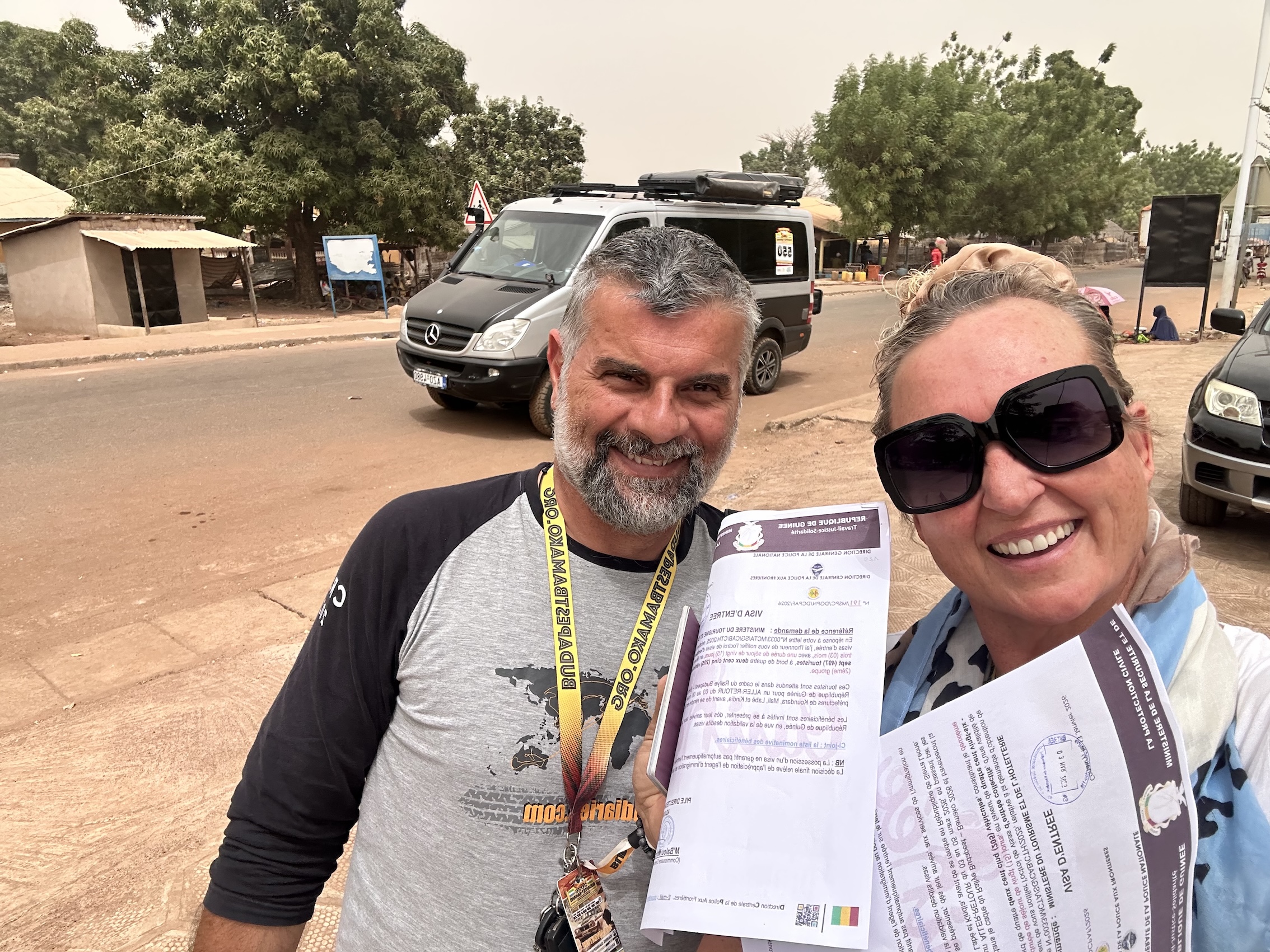
What began as another overland journey from Greece became something far bigger than we ever imagined. It became a true test of endurance, patience, adaptability, and spirit. We crossed deserts, borders, mountain passes, and countries that constantly pushed us beyond our comfort zone. We dealt with breakdowns, exhaustion, fear, brutal roads, endless setbacks, and moments where even holding the vehicle together with duct tape felt like a victory.
But this is exactly what overlanding is about.
It is not only about the beautiful places, the sunsets, or the perfect campsites. It is about continuing when things go wrong. It is about solving problems far away from home, trusting strangers, meeting incredible people along the way, and discovering how much both us and our vehicle can endure together.

Somewhere between the Sahara, the broken roads of Guinea, and the chaos of African borders, we were reminded why we chose this lifestyle in the first place. The freedom, the uncertainty, the challenge, and the stories that no comfortable holiday could ever give us. After all, despite all the difficulties, the answer remains the same.
Without hesitation — yes. I would do it all again. Rochelle??Not Sure she will!